
Happy Valley homes near Scouter Mountain Nature Park and Happy Valley Park often feature ductwork installed during the 1990s and early 2000s boom, when many single-family residences were built on sloped terrain that funnels winter rainwater toward foundations. Wet Pacific Northwest winters drive condensation inside metal ducts, especially where returns run through unconditioned crawl spaces common in Clackamas County. This moisture mixes with fine silt from nearby construction and pollen from the surrounding hills, creating buildup that restricts airflow and feeds microbial growth on interior surfaces.
Standard vacuum-only methods miss the layered deposits that form along seams and at 90-degree elbows in these older systems. Technicians must use agitation tools sized for 6- to 8-inch residential trunks typical in the area, followed by HEPA filtration to capture the fine particles without redistributing them into living spaces. Homes bordering Portland or Clackamas city limits frequently share duct runs with attached garages, requiring separate sealing steps to prevent pulling vehicle exhaust or stored chemicals into the airstream during cleaning.
Mild summers reduce overall load but allow dust from Scouter Mountain trails and Happy Valley Town Center parking areas to settle undisturbed until the first heavy rains. Neglected vents in these conditions produce uneven room temperatures and musty odors when furnaces kick on after long dry periods. Proper cleaning restores balance without introducing excess moisture that could linger through the next wet season.
Technician insight
In Happy Valley, the thing that catches most people out with air vent cleaning is how wet winters push moisture into the duct seams of 1990s homes built around Scouter Mountain, where standard brushes slide right over the hidden film until the next heating cycle reactivates the smell.
Hidden Moisture in a Scouter Mountain Home
A single-story house near Scouter Mountain Nature Park showed uneven heating and a persistent musty odor after the first fall rains. Inspection revealed standing condensation along a return trunk running through the crawl space. The crew performed full agitation and extraction, then sealed accessible joints before restoring airflow.
How it works
- 1
Initial Walk-Through and Access Check
Technician inspects every accessible vent, return, and trunk line from the attic to the crawl space, noting any collapsed flex runs or blocked registers common in Happy Valley's hillside homes.
- 2
Negative-Pressure Setup
Equipment is staged at 13203 SE 172nd Ave and brought on-site to create containment before any agitation begins, protecting finished surfaces in homes near Happy Valley Park.
- 3
Mechanical Agitation and Extraction
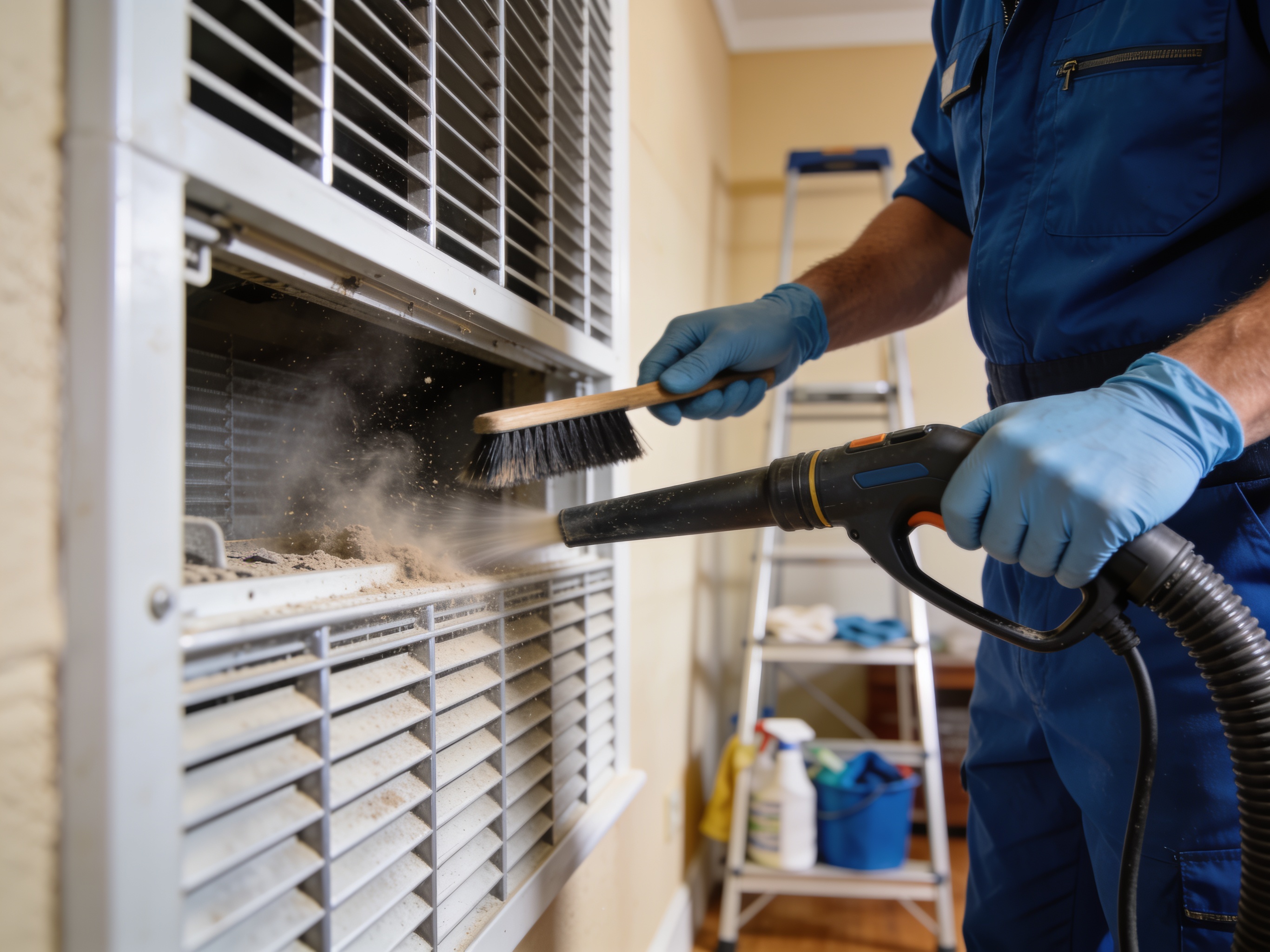
Rotating brushes and compressed-air whips loosen debris along the full length of each duct while the vacuum removes material, paying special attention to seams that trap moisture from Clackamas County winters.
- 4
Post-Cleaning Verification
Each vent is rechecked with a camera and airflow meter; homeowners receive a written summary of findings before the crew departs.
Pricing
Cost depends on number of runs, access difficulty, and whether additional dryer or bathroom exhaust lines are included; request an on-site assessment for a firm quote.