
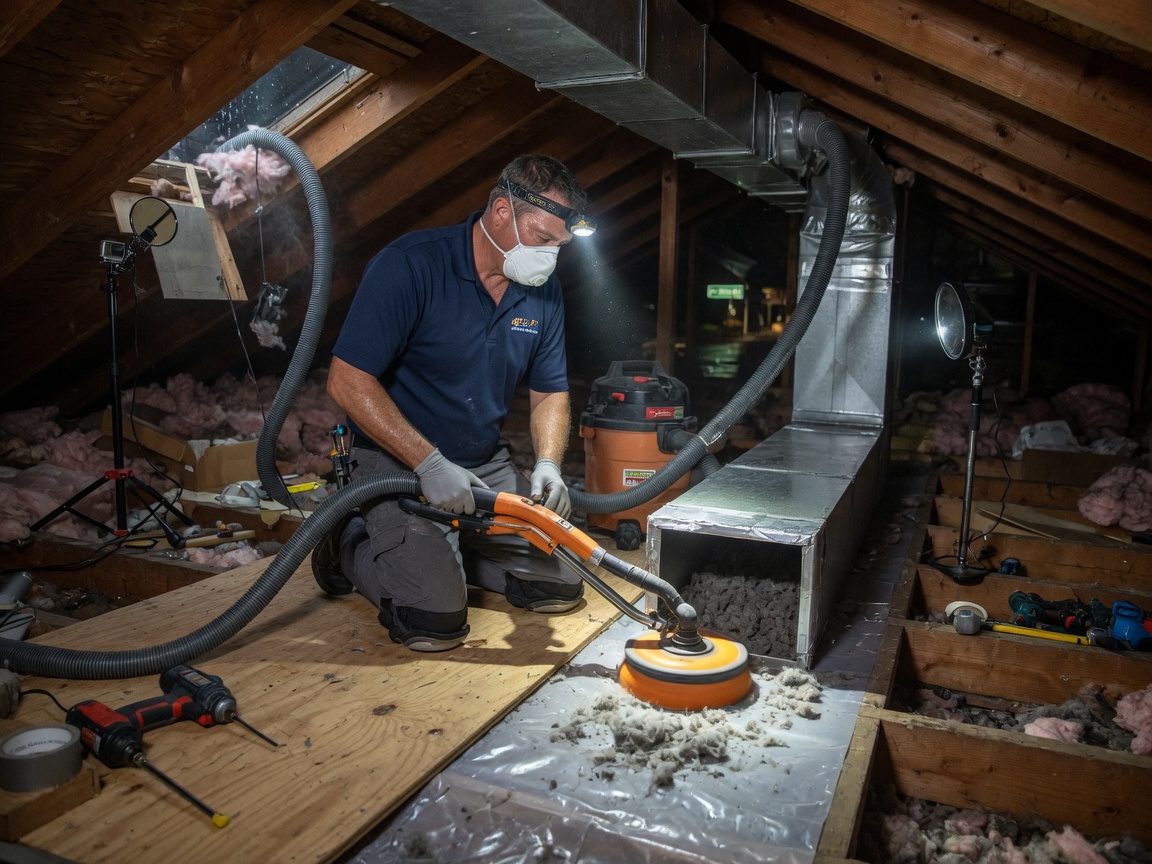
Pacific Northwest winters bring weeks of steady rain that pushes humidity through vents in Clackamas County homes, especially those built around Happy Valley Town Center where newer construction still sits on older shared trunk lines. Moisture collects on metal and flex duct, creating conditions for mildew that standard filters miss. Technicians working 24/7 use negative-air machines sized for the longer runs common in Scouter Mountain developments, pulling debris without collapsing lightweight ducts installed during the 2000s building surge.
Mild summers reduce cooling demand yet leave heating systems running eight months a year, so dust from nearby trails at Scouter Mountain Nature Park and pollen from Happy Valley Park settles deep in returns. Homeowners often notice musty smells first in upstairs bedrooms where branch ducts are longest. A 24/7 call lets crews reach properties before the next rain cycle restarts the cycle, using brushes matched to duct diameter rather than one-size whips that miss corners.
Terrain around Scouter Mountain creates steeper roof pitches and crawl spaces that trap condensation; crews check these areas first because water intrusion here travels straight into the main trunk. Portland commuters living in Happy Valley often run baths and dryers at odd hours, adding extra load the system was not sized for. Night calls require headlamps and quiet equipment so neighbors near the Town Center are not disturbed while work continues.
Technician insight
In Happy Valley the thing that catches most people out with 24/7 Air Duct Cleaning is how quickly rain soaks into crawl-space ducts near Scouter Mountain; homeowners wait until the smell reaches the living room instead of calling when they first notice damp registers after a string of wet weeks.
Late-night call after heavy rain
A homeowner near Happy Valley Town Center reported strong musty odor from the upstairs vents following three days of rain. Inspection found standing water in a low section of flex duct running under the garage slab. Crews isolated the line, extracted the water and debris, and restored airflow before the next storm front arrived.
How it works
- 1
Initial Assessment
Arrive at the Happy Valley address, inspect accessible registers and the furnace or air handler location, and note any visible moisture stains from recent wet weather.
- 2
System Isolation
Seal off sections of ductwork with temporary barriers so negative pressure pulls debris only through the intended path without disturbing living spaces.
- 3
Mechanical Cleaning
Run rotary brushes and vacuum collection through main and branch lines while monitoring airflow to catch hidden buildup common after years of winter heating.
- 4
Final Verification
Reassemble, run the system, and confirm registers are clear before leaving the site, typically within a few hours even on overnight calls.
Pricing
Cost depends on number of stories, total linear feet of duct, and whether moisture remediation is needed after winter rains.