
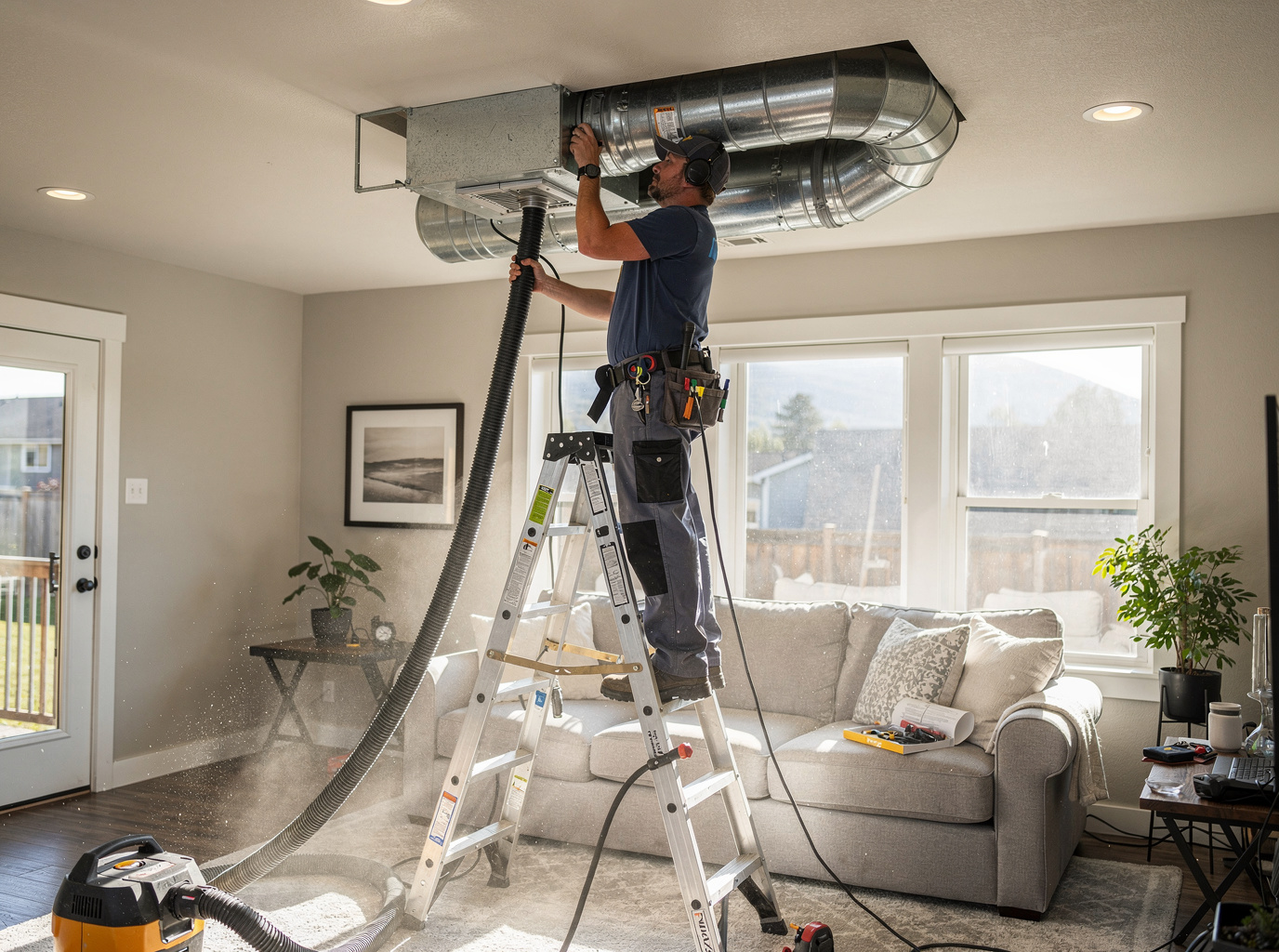
Homes in Happy Valley Town Center and around Scouter Mountain often sit on sloped terrain with crawl spaces that collect moisture during the region's long wet winters. This leads to condensation inside metal ducts, especially where insulation is thin or missing, allowing dust and microbial growth to cling to surfaces that standard filters miss. Technicians must account for these conditions when accessing trunk lines and branches, using negative pressure equipment to prevent spreading contaminants into living spaces during removal.
Clackamas County properties built before the 1990s commonly feature flexible duct runs routed through attics that experience temperature swings between mild summers and cold snaps. These runs can sag or develop tears, trapping debris that restricts airflow and raises energy use. Proper cleaning requires mapping each run from the air handler outward, sealing access points afterward, and checking for disconnected sections that homeowners in Scouter Mountain neighborhoods frequently overlook until heating bills spike.
Pacific Northwest soil conditions around Happy Valley Park contribute to higher indoor humidity levels that migrate into ductwork through unsealed penetrations. This environment demands careful inspection of return air pathways near bathrooms and kitchens, where cooking vapors and shower steam accelerate buildup. Work in these homes includes isolating the system, removing loose material with brushes sized for the duct diameter, and verifying airflow restoration without introducing new moisture sources.
Technician insight
In Happy Valley, the thing that catches most people out with licensed and insured duct cleaners is how wet winters push moisture into the low crawl spaces around Scouter Mountain, letting hidden mold form on duct undersides that only becomes obvious once heating starts and homeowners notice musty odors.
Hidden Buildup Near Happy Valley Town Center
A homeowner near Happy Valley Park reported weak airflow and lingering odors after the first cold snap. Inspection revealed condensation and dust accumulation in flexible runs routed through the crawl space. The team isolated the system, extracted the material, and resealed access points. Airflow returned to normal with no further odor complaints.
How it works
- 1
Initial System Mapping
Technicians trace every accessible duct run from the air handler through the home, noting access points and any visible damage in crawl spaces or attics typical of Happy Valley construction.
- 2
Negative Pressure Setup
Equipment creates containment to pull debris outward while protecting living areas from dust stirred up during the wet season when indoor humidity is elevated.
- 3
Mechanical Agitation and Extraction
Brushes and compressed air dislodge material from duct walls, with vacuum collection removing it before it settles in branches near Scouter Mountain Nature Park homes.
- 4
Post-Cleaning Verification
Airflow is checked at registers and the system is returned to normal operation, confirming no new leaks were introduced during access.
Pricing
Pricing reflects home size, number of runs, and access difficulty created by crawl spaces and attic configurations common in Clackamas County.