
2026-09-07 · Mike Sullivan
How Wildfire Smoke Affects Ducts in Clackamas County Homes
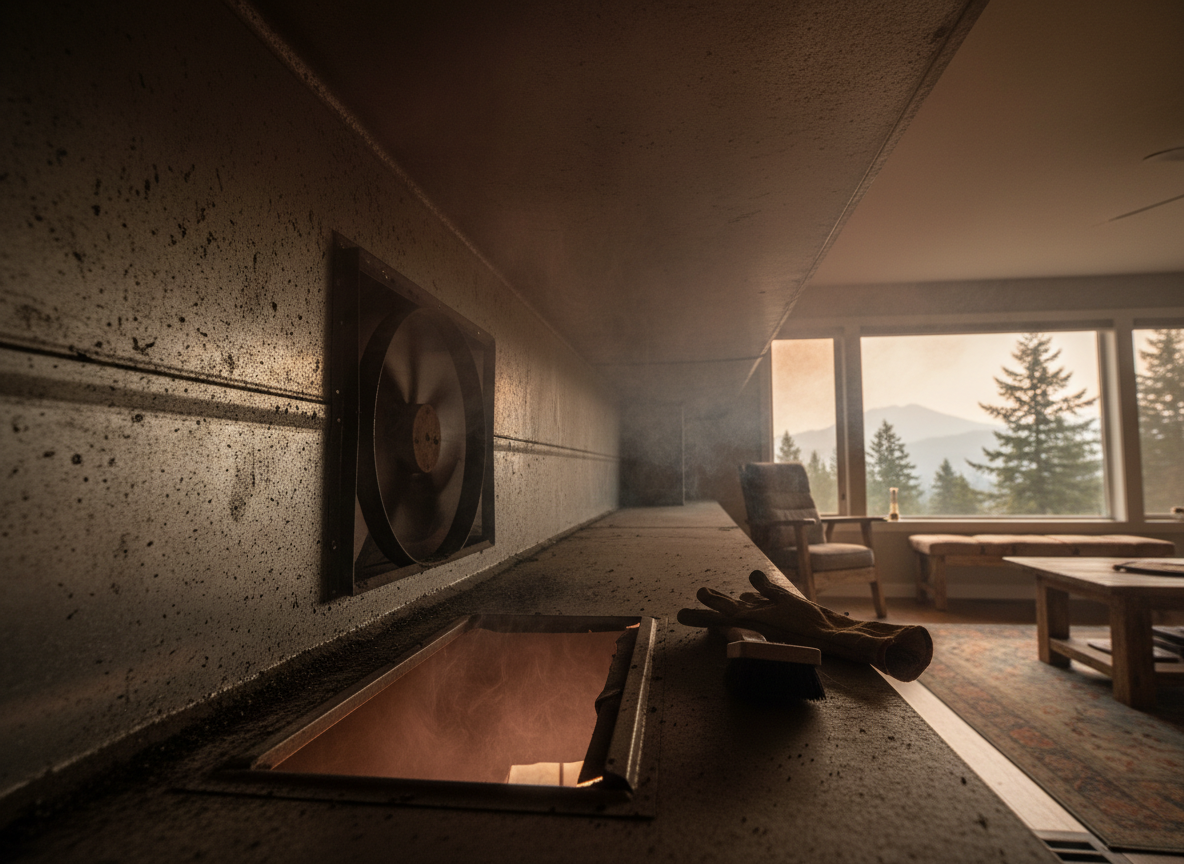
Wildfire smoke deposits fine particulate matter throughout the ductwork of Clackamas County homes, with accumulation rates rising sharply during east wind events from August through October. These particles, often under 2.5 microns, travel through return vents and settle on interior duct surfaces, blower motors, and coil fins. In Happy Valley homes built after 2000 near Happy Valley Town Center, systems with attic runs experience faster loading because attics reach higher temperatures and pull in outside air during smoke events. Older homes closer to Portland show similar patterns but with added layers from decades of prior use.
How Smoke Particles Travel Through Local Duct Systems
Clackamas County homes typically use forced-air systems with ducts routed through attics or crawl spaces. During wildfire smoke episodes, negative pressure from the blower pulls particles inward through unsealed joints and filter bypasses. In neighborhoods around Scouter Mountain Nature Park, wooded terrain channels smoke downhill into lower elevations, increasing exposure for homes on Scouter Mountain Road. The Pacific Northwest pattern of dry summers followed by wet winters means smoke residue sits undisturbed for months until moisture arrives. This sequence allows oily compounds from burned vegetation to adhere firmly to metal surfaces, making later removal more involved than standard dust cleaning.
Impact of Pacific Northwest Climate Cycles
Mild summers keep windows open longer in Happy Valley, allowing smoke to enter living spaces and then get pulled into HVAC returns. Once winter rains begin, humidity levels climb inside ducts located in vented crawl spaces common along SE 172nd Avenue corridors. The combination leaves a film that can support microbial growth when temperatures stay above 50 degrees for extended periods. Homes near Happy Valley Park often sit in slight depressions that trap cooler, moister air, extending the time smoke particles remain suspended before settling. These seasonal shifts directly change how much material accumulates on coil fins and inside flex duct runs.
Visible and Performance Effects in Clackamas Homes
Residents notice reduced airflow from registers, especially on second floors where longer duct runs collect more material. Dark streaks appear around supply vents after the first heavy rain following a smoke event. In systems 8–15 years old, the added layer increases static pressure, forcing blowers to run longer cycles. Scouter Mountain homes with heat pumps report louder operation during fall startup because motors work against restricted passages. These changes appear consistently in post-smoke inspections across the county rather than isolated cases.
Practical Assessment Steps for Homeowners
Start by removing return grilles in central hallways and checking for gray or brownish film on the first 12 inches of visible duct. Run the fan for 10 minutes with a clean white sock taped over a supply register; discoloration indicates particle movement. Note any musty odor that strengthens when the system starts after a wet period. Compare airflow strength between rooms on the same floor; uneven output often traces to partial blockages downstream from the air handler. These checks help identify whether ducts need professional attention before winter heating begins.
Long-Term Considerations for Clackamas County Residences
Repeated smoke events compound inside ductwork because each season adds a new layer before the previous one is removed. Homes within two miles of Scouter Mountain Nature Park experience higher baseline loading due to surrounding vegetation that burns during regional fires. Wet winters then convert settled particles into a more adherent residue that standard filter changes cannot address. Over 5–8 years this buildup can reduce system efficiency enough to affect energy use during both heating and cooling months. Regular visual inspections tied to the local fire season remain the most direct way to track changes specific to this area.