
2026-09-07 · Mike Sullivan
Spotting Mold Risks in Air Ducts After Happy Valley's Wet Winter
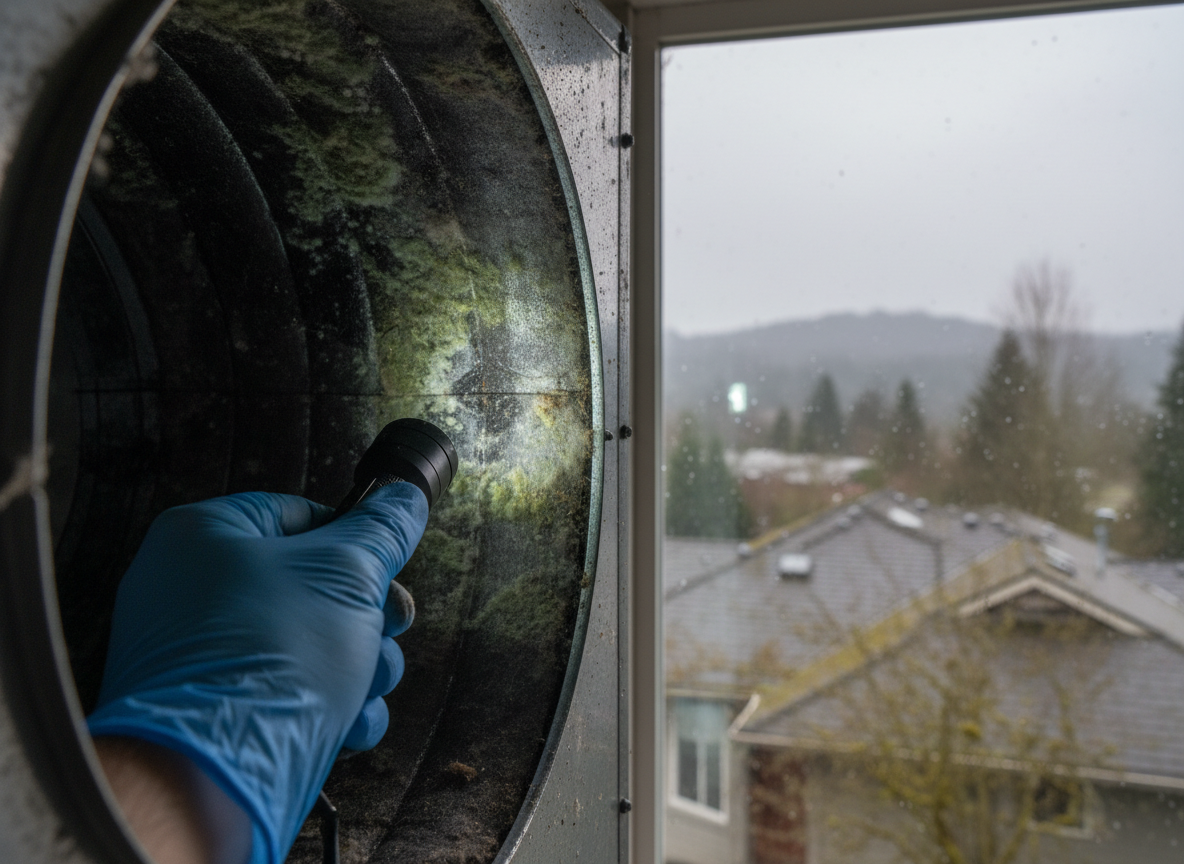
After Happy Valley's wet winters, mold risks in air ducts increase when excess moisture from prolonged rain seeps into ductwork and combines with dust buildup, particularly in homes near Scouter Mountain Nature Park where fog and damp air linger into spring. This pattern occurs because Pacific Northwest winters deliver steady rainfall that raises indoor humidity levels in Clackamas County residences, allowing spores to settle and grow on metal surfaces or insulation within the ducts. Homes in Happy Valley Town Center often feature older HVAC setups that lack modern moisture barriers, making them more susceptible once temperatures stay mild but damp for months.
How Pacific Northwest Wet Winters Drive Moisture into Ducts
Clackamas County experiences extended periods of rain from November through March that keep relative humidity above 70 percent for weeks at a time. This moisture enters through roof vents, crawl spaces, or poorly sealed return ducts common in homes built near Happy Valley Park. When mild summer temperatures arrive, any standing water inside the ducts evaporates slowly, leaving behind conditions that support mold colonies on fiberglass liners or at joints. Properties along SE 172nd Avenue corridors frequently show higher condensation rates because of the area's terrain that traps cool air overnight. Residents notice musty odors strongest after the first warm days of April when the system cycles on after sitting idle.
Visible and Sensory Signs of Mold Growth in Local Ducts
Check supply vents in bedrooms and living areas for black or green speckling along the edges, especially in houses within a mile of Scouter Mountain Nature Park where drainage can direct water toward foundations. A persistent earthy smell that strengthens when the furnace runs indicates colonies forming deeper in the trunk lines. In Happy Valley Town Center homes with metal ductwork installed before 2000, inspect the plenum box for fuzzy patches or water stains that signal repeated saturation during winter storms. Homeowners may also see increased allergy symptoms or dust that reappears quickly on surfaces even after cleaning, because spores circulate each time the blower activates.
Housing and Terrain Factors Specific to Happy Valley
Many single-family homes in Clackamas County near Portland feature duct runs through unconditioned attics or crawl spaces that stay cool and damp long after rain stops. The slight elevation changes around Scouter Mountain allow water to pool against exterior walls, raising the chance that moisture migrates into return-air pathways. Older construction in Happy Valley Town Center often uses unsealed joints that let humid air from the wet winters infiltrate the system. These conditions differ from drier inland areas because the mild temperatures prevent complete drying, leaving residual water that mold needs to establish itself over the 8–12 week stretch of heaviest rainfall.
Practical Inspection Steps After Winter Ends
Turn off the HVAC system and remove vent covers in two or three rooms to look inside the first few feet of duct with a flashlight and mirror. Feel along accessible sections for damp spots or soft insulation that has absorbed water during the wet season. Note any discoloration at elbows or where ducts pass through exterior walls, common entry points for moisture in Clackamas County homes. If odors or visible growth appear in multiple locations, document the findings with photos before restoring power. These checks help determine whether surface cleaning suffices or if sections require full access.
When Professional Assessment Becomes Necessary
If signs extend beyond the first accessible feet or affect the main trunk line running through the attic, contact a service familiar with Happy Valley's housing stock. PureVent Solutions operates 24/7 from 13203 SE 172nd Ave, Suite 160, Happy Valley, OR 97086 and can reach properties near Portland or Clackamas within the same day during peak spring months. A thorough inspection reveals whether insulation replacement or targeted drying is required to stop regrowth before the next wet winter cycle begins.